Hong Kong to Foshan: Rail Connections, Private Car and the Last Mile
GBA Executive Cars editorial · Sources checked 2026-09-13
For a Hong Kong-to-Foshan journey, choose the final district and entrance before choosing transport. Foshan is not one interchangeable arrival point: a Chancheng hotel, a Nanhai factory and a Shunde showroom may need different station connections or road plans. Compare a train available for your date with a private-car quote covering the same complete journey, including the last mile.
- Ask for the Chinese address, district, map pin and vehicle entrance, especially for a factory or showroom.
- Foshanxi appears in MTR’s destination list, but a listed station is not a guaranteed train or available seat for your date.
- A Hong Kong-to-Foshan fare needs confirmation in that direction; published Foshan-to-Hong-Kong fares cannot be reversed.
- For a meeting or return train, include reception, loading and the connection from the final stop.
On this page
Start with the Foshan district and entrance
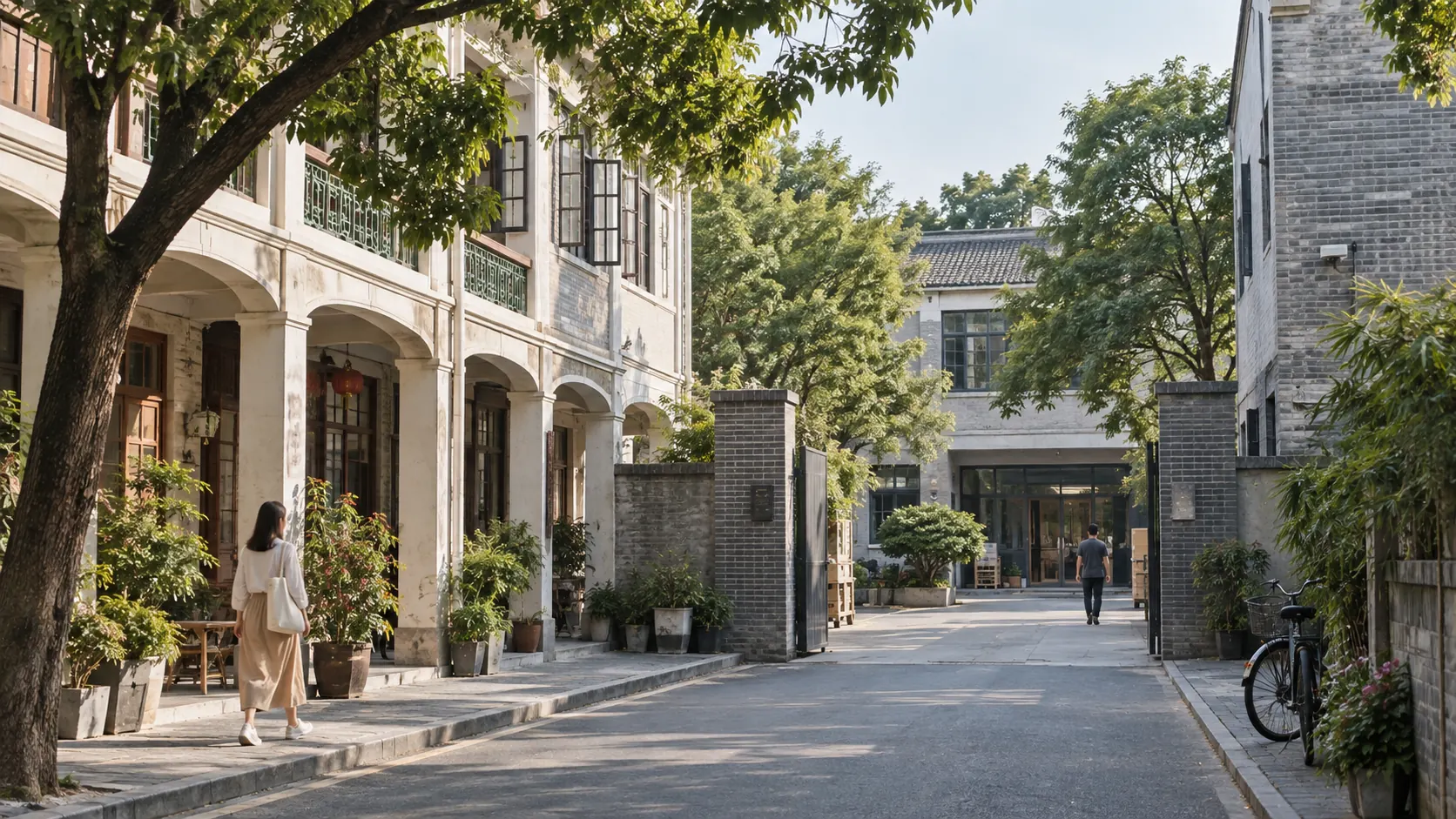
“Foshan” is enough for an initial search, but too broad for a useful transport booking. Begin with the destination’s Chinese name and street address, then identify the district and entrance. A hotel lobby, a visitor reception gate and a warehouse loading gate can be separate destinations even when they belong to the same business. Ask your host which one visitors should use and who will meet you.
For Chancheng, decide whether the trip ends at a city hotel, an attraction or a specific business address. For Nanhai, obtain the town or subdistrict as well as the factory name. For Shunde, identify the actual showroom, office or accommodation entrance rather than treating the district label as a station. The worksheet illustrates three different tasks; it is not a record of customers or a list of verified journey times.
Scroll sideways to read the full table.
| District/address | Candidate station or road plan | Last-mile connection | Appointment constraint | Quote/source status |
|---|---|---|---|---|
| Chancheng hotel — obtain full street address | Check Foshanxi against other bookable arrival options; compare a hotel-bound road plan | Confirm station pickup or the walk/ride to the hotel’s actual lobby | Check-in availability and luggage storage | Foshanxi is listed by MTR; date and hotel connection remain to be checked |
| Nanhai factory — obtain town and visitor gate | Compare the host’s recommended rail station with a direct road itinerary | Visitor gate, security reception and host contact | Appointment begins at reception, not at the railway station | Planning example; no factory visit or local travel time claimed |
| Shunde showroom — obtain building and entrance | Compare a bookable rail connection and road quote for this exact address | Showroom entrance and any second stop | Fixed meeting time and return endpoint | Separate address and directional fare confirmation required |
Arrival in Guangzhou is not arrival at your Foshan hotel. A Guangzhou station may form part of a sensible itinerary, but its departure and arrival times cover only that rail segment. Keep the onward journey visible when comparing it with any other option.
- Hong Kong entrance
Confirm the real starting point and luggage.
- Bookable transport
Choose the actual train or agreed cross-border road plan.
- Foshan district
Match Chancheng, Nanhai or Shunde to the full address.
- Final connection
Check the station exit or vehicle access route.
- Visitor entrance
Allow for reception before the appointment begins.
Conceptual sequence, not a geographic map or distance comparison.
Check the rail itinerary actually available
MTR’s current High Speed Rail destination list includes Foshanxi, commonly written as Foshan West. Start the official search with Hong Kong West Kowloon and your travel date, then inspect the train’s arrival station and time. A destination appearing in the network does not establish that a suitable direct train operates at your preferred hour or has seats for your group.
If the search does not provide a usable direct option, compare an interchange itinerary. Record each train separately: departure station, arrival station, date, class and transfer interval. Check whether a change is within the same station or involves travel to a different station. A short rail segment can still produce an awkward complete trip when the interchange, station access or final road connection is poorly matched.
Show your host the Chinese station name from the booking result; “Foshan station” is ambiguous. Use MTR’s destination-connection information for orientation, then confirm the current local connection. Older attraction guides do not establish today’s bus routes or journey times.
Compare the final connection with a private car
Place the two complete journeys side by side. The rail option starts at your Hong Kong address and ends at the Foshan entrance, not at West Kowloon and a Mainland platform. A private-car option also needs a defined endpoint: confirm that the agreed vehicle can reach the visitor gate, whether a local transfer is involved and how the border process works for the party.
Scroll sideways to read the full table.
| Journey component | Rail connection | Private car | Evidence/date |
|---|---|---|---|
| Hong Kong starting point | Address-to-station transport plus station procedures | Agreed vehicle meeting point and loading | Traveller’s address; planning method checked 13 September 2026 |
| Main travel stage | Ticketed train and any separately verified interchange | Confirmed route, crossing and any vehicle change | MTR booking result or provider’s written itinerary |
| Foshan last mile | Station exit to the actual hotel, showroom or visitor gate | Agreed accessible entrance, with remaining walk disclosed | Host or venue confirms the entrance |
| Luggage | Each traveller handles bags within railway limits and transfers | Load confirmed against actual seating and bags | Current railway terms or vehicle confirmation |
| Return | Last appointment to station, processing and a separately checked train | Departure address, time window and final Hong Kong endpoint | Fresh return booking or written return quote |
If you are travelling lightly to one address with a workable station connection, rail may be the simpler purchase. If several travellers carry bulky bags, or the day involves two factory gates and a return from another district, a tailored road itinerary may reduce coordination. That is a comparison of tasks, not evidence that a private car is always faster or cheaper.
For road travel, the Immigration Department’s control-point information is the official starting point for passenger opening hours. A usable opening window does not prove a vehicle’s eligibility or eliminate queues. Compare options against the same appointment target and write down which uncertain stage would cause the greatest difficulty if it runs late.
Understand direction-specific fare bands
The Hong Kong-to-Foshan outward price must be quoted for your actual pickup and destination. The site’s fare sheet contains several Mainland-to-Hong-Kong groups; those are useful for understanding why a generic “Foshan fare” is incomplete, but they are not an outward quote. View the Hong Kong–Foshan route arrangements and send the full direction with the address.
For the reverse journey, the general Foshan-to-Kowloon or HKG row starts at RMB 1,900 per vehicle one way, approximately HKD 2,210. A separate HZMB group lists Shunde to HKG or Tung Chung from RMB 1,600, approximately HKD 1,860, and Chancheng, Nanhai or Gaoming to HKG or Tung Chung from RMB 1,800, approximately HKD 2,090, each per vehicle one way. These are distinct route conditions, not competing prices for an identical trip.
Do not take the lowest Shunde figure, attach a Nanhai address and call it a confirmed fare. Likewise, a Hong Kong Island destination or an extra stop changes the quotation question. Ask which fare group, crossing and additions apply to the proposed return. All figures are starting prices; HKD is an approximate planning conversion rather than a live exchange rate or settlement promise.
A round trip needs separately confirmed directions, timing and waiting. Retaining a car between meetings differs from arranging another collection later; neither is priced by automatically doubling a reverse-direction fare.
Planning factory appointments or a return
Planning example: three travellers leave a Kowloon hotel for a 10:30 visitor appointment in Nanhai, then attend a 15:00 showroom meeting in Shunde before returning to Hong Kong. These are hypothetical appointment times, not a claim that this sequence is feasible from a particular hotel. Obtain both entrance pins before asking anyone to choose a train or set a pickup time.
For the first stop, ask whether the host needs visitor names or advance vehicle registration, and whether “10:30” means reporting at the gate or being seated in the meeting room. For the second, check the expected finish time, where bags can stay and whether the showroom entrance is suitable for collection. The interval must cover the first meeting, any reception exit process, loading, the inter-district journey and the second reception process.
If the first meeting has no reliable finishing time, avoid building the entire return around the latest possible train. Ask the host for a shorter meeting scope, choose a return with a workable change policy or obtain a road-return arrangement whose waiting and overtime terms are explicit. None of those actions guarantees recovery from a late meeting, but each makes the consequence understandable before departure.
Send all stops together through the business and factory itinerary enquiry. Adding Shunde after accepting a quote for one Nanhai destination is a route change, not merely a small update to a city name. The person arranging meetings should also be available to approve a revised sequence or additional charge.
Send a complete journey for confirmation
Before requesting a final comparison, assemble a short itinerary that another person could follow without knowing the area. Include the Hong Kong pickup entrance, Foshan district, Chinese and English venue names, full address, map pin, visitor entrance and local contact. Add appointments as dated time windows and distinguish fixed commitments from preferences.
List passengers and luggage sizes, including return purchases or samples. Ask the provider to accept the largest expected load with the required seating in place.
Specify the return endpoint: Kowloon, Hong Kong Island or HKG, adding airline requirements if relevant. In your Foshan journey enquiry, request the route, stops, waiting, both directional prices and change terms. Compare those complete arrangements against your rail plan.
Frequently asked questions
Is arriving in Guangzhou the same as reaching Foshan?
Which Foshan station serves my address?
Does Shunde use the same fare as central Foshan?
Can I reuse a Foshan-to-Hong-Kong quote?
What should I send for a factory visit?
Compare the journey to your Foshan entrance
Send the complete addresses and appointment constraints to receive a direction-specific road plan that can be compared fairly with your rail option.
- Travel date and Hong Kong entrance
- Foshan district, Chinese address and map pin
- Visitor gates and local contacts
- All appointments and expected finish times
- Passengers, bags and return purchases
- Return time and final endpoint
Opening the link prepares a message. You choose whether to send it, then obtain written confirmation of the itinerary and quote.
Sources and scope
- MTR High Speed Rail destinations
Foshanxi is listed as a destination; schedule search supports date-specific planning. Station availability in network, not confirmed seats or daily direct departure. · Checked 2026-09-13
- MTR destination connections
Official destination-connection lookup. No old attraction-guide bus timing treated as current. · Checked 2026-09-13
- Hong Kong Immigration Department: control points
Official passenger opening-hour lookup. No asserted crossing or new terminal movement pattern. · Checked 2026-09-13
- GBA Executive Cars fare information
Reverse-direction Foshan and HZMB/Shunde starting fare groups. Per vehicle one way; Mainland to named Hong Kong endpoints only; HKD approximate. · Checked 2026-09-13